How we research: this guide is based on manufacturer specifications, published data and verified customer feedback. Products are not personally tested unless marked “Tested by us”. Our process.
We may earn a commission when you buy through links on this site, at no extra cost to you. As an Amazon Associate I earn from qualifying purchases.
This guide helps homeowners compare the handheld tools that clean up lawn edges and the debris around them. If trimming is the main job, start with Best Battery String Trimmers for 2026. If you want to narrow battery vs. gas first, read How to Choose a Battery-Powered String Trimmer in 2026. If cleanup is the bigger problem, compare Best Battery Leaf Blower for Homeowners in 2026 and Best Cordless Leaf Blower for 2026.
The real decision is usually not just power; it is whether you want one battery family, a dedicated tool, or a platform that can grow into more yard gear later.
If shrubs are part of the same routine, Best Hedge Trimmer Picks for 2026 belongs on the same shopping list.
Quick picks
Comparison table
| Type | Best for | What to compare | Main trade-off | Check price |
|---|---|---|---|---|
| Battery-powered string trimmer | Edges, fences, and beds | Cutting swath, line feed, line size, and balance | Runtime can fall quickly in thick weeds | — |
| Cordless leaf blower | Driveways, patios, and seasonal cleanup | CFM, MPH, variable speed, and battery size | Boost mode shortens runtime | — |
| Hedge trimmer | Shrubs and formal hedges | Blade length, reach, and handle comfort | Does not replace a trimmer or blower | — |
| Attachment-capable string trimmer | Buyers who want multiple yard heads | Attachment standard, battery platform, and weight | Usually heavier and needs compatibility checks | — |
| Gas trimmer | Rough or overgrown properties | Engine upkeep and fuel handling | More noise and maintenance | — |
| Corded string trimmer | Small yards near an outlet | Cord reach and handling | Mobility is limited by the cord | — |
Our picks in detail
Greenworks 60V 16-inch Cordless Electric String Trimmer
Best for: Buyers who want a 60V trimmer kit with battery and charger included, plus attachment-capable convenience.
60V battery platform with a brushless motor.
Adjustable 14"/16" cutting path for different trimming jobs.
LOAD N' GO bump-feed head with 0.095-inch max line diameter.
Variable-speed trigger with 2 speed settings and no-load speed up to 6,300 RPM.
Includes a 4.0Ah battery, 3A charger, shoulder strap, and a 4-year tool/battery warranty.
- Power source
- 60V battery platform
- Motor
- Brushless
- Cutting path
- Adjustable 14"/16"
- Attachment capability
- Compatible with trimmer attachments
- Line feed
- LOAD N' GO bump-feed head
- Line size
- 0.095-inch max line diameter
- Speed control
- Variable-speed trigger with 2 speed settings
- No-load speed
- Up to 6,300 RPM
- Package contents
- 4.0Ah battery, 3A charger, shoulder strap included
- Warranty
- 4-year tool/battery warranty
Pros
- Attachment-capable if you want future add-ons.
- Adjustable 14"/16" cutting path gives some flexibility for different jobs.
- Kit includes a battery, charger, and shoulder strap.
Cons
- Attachment-capable systems are usually less compact than basic trimmers.
- May be more tool than you need if you only want a simple edging machine.
- Runtime depends on the size and thickness of the job.
Skip it if: Skip if you want the lightest, simplest trimmer and do not plan to use compatible attachments.
EGO POWER+ 56-Volt 765-CFM Brushless Handheld Cordless Electric Leaf Blower (Tool Only), LB7650
Best for: Buyers who already own EGO 56V batteries and want a high-output blower.
High-output handheld blower with variable speed and weather resistance.
Up to 765 CFM and up to 200 MPH for tougher cleanup.
Tool-only format is best if you already own the compatible battery platform.
What owners mention: Verified owner feedback commonly praises the strong airflow, easy operation, and ergonomic handling. Common complaints focus on battery drain in turbo mode.
- Model
- LB7650
- Airflow
- 765 CFM
- Airspeed
- Up to 200 MPH
- Speed control
- Variable speed
- Motor
- Brushless
- Weight
- 4.6 lb without battery
- Weather resistance
- IPX4
- Power format
- Tool only
- Battery / charger
- Not included
- Warranty
- 5-year tool / 3-year battery family warranty
Pros
- Strong airflow for leaves, clippings, and driveway debris.
- Cordless convenience with a high-output cleanup tool.
- Variable-speed control is useful for lighter cleanup around beds and windows.
Cons
- Turbo use can shorten runtime.
- Can feel heavy during longer cleanup sessions.
- Tool-only format requires platform planning if you are starting from scratch.
Skip it if: Skip if you need the longest possible runtime per charge or want a kit with the battery and charger included.
Start with the job you actually need to do
Tip: Start with the chore you repeat most often. A string trimmer handles edges and weeds, a blower saves time after mowing or when leaves pile up, and a hedge trimmer is for shrubs rather than lawn borders.
If you want the exact difference between a trimmer and a dedicated edger, String Trimmer vs Edger: Which Tool Should You Buy? is the cleanest way to decide.
For homeowners who only want one purchase this season, buy the tool that solves the most annoying chore first and add the rest later.
- Trimmer: best for fences, beds, sidewalks, and edge cleanup.
- Blower: best for clippings, leaves, and driveway cleanup.
- Hedge trimmer: best for shrubs and formal hedges, not lawn edges.
When a trimmer can also edge
Many string trimmers can rotate into an edging position, which is enough for casual borders and a simple driveway line. That can save space and eliminate the need for a separate edger.
A dedicated edger is more useful if you want a very crisp border around long walks, patios, or beds and you plan to re-cut that line often.
When a hedge trimmer belongs in the cart
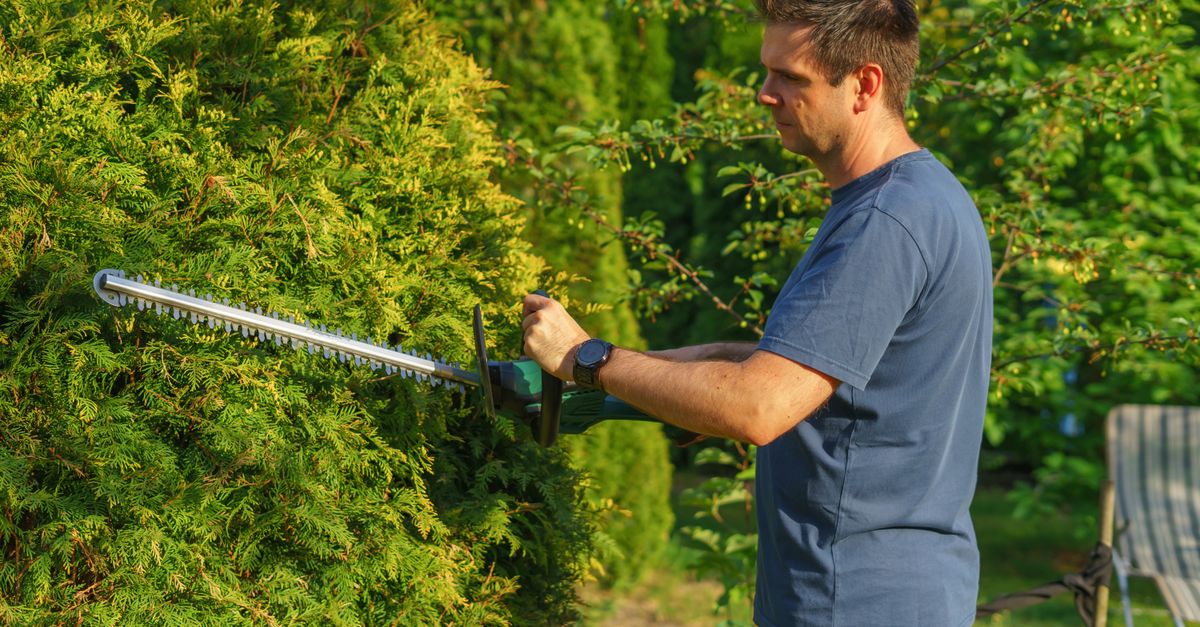
Hedge trimmers are for shrubs and formal hedges, not grass or weeds. They make sense when your landscape has more shrub care than lawn edging.
If you want to share batteries across a trimmer, blower, and hedge trimmer, platform compatibility matters more than any one tool spec.
Choose the power source and platform first
For most homeowners, the choice is less about raw power and more about how much setup and upkeep you want. Battery tools are simpler and usually quieter; gas tools can handle tougher overgrowth but add fuel handling and maintenance; corded tools work best only when you stay close to an outlet.
Tip: If you already own batteries in one platform, start there before comparing a new brand. A shared battery family can cover a trimmer, blower, and even a hedge trimmer, which makes charging and storage easier.
If you are still deciding whether a battery tool is enough for your trimmer, How to Choose a Battery-Powered String Trimmer in 2026 breaks down the tradeoffs.
Model packaging matters too: the Greenworks 60V 16-inch Cordless Electric String Trimmer package includes a 4.0Ah battery, 3A charger, and shoulder strap, while the EGO LB7650 is tool-only and expects you to already own the battery system.
- Choose battery if you want the easiest routine and the least mess.
- Choose gas if the job is large, tough, or far from charging options.
- Choose corded only if your yard layout works with an extension cord.
Tool-only vs. kit
Tool-only models make sense when you already own compatible batteries and chargers. Kits are the easier starting point if you are building a collection from zero because the battery and charger are matched to the tool.
Why one battery family matters
A shared platform can power a trimmer, blower, and hedge trimmer, which makes charging and storage easier. It can also keep future purchases simpler because the batteries do not become stranded.
Before you commit, make sure the brand actually sells the next tool you want, not just the one in the box today.
Read the specs that affect real-world use
On a string trimmer, the most useful numbers are cutting swath, line size, line-feed style, shaft adjustability, and balance. A wider cutting path covers more ground, but it can feel less nimble near beds and corners.
On a blower, CFM and MPH work together. CFM tells you how much air moves; MPH tells you how fast it moves. More CFM usually helps with piles, while more MPH helps loosen stubborn debris.
Watch out: Turbo or boost mode is for short bursts, not an all-day setting, because it usually shortens runtime quickly.
Battery runtime depends on battery size, the thickness of the growth, and how often you use boost. If an attachment-capable trimmer is on your list, the exact attachment standard matters just as much as the headline power.
- Brushless motors are generally a good sign for efficiency and less routine fuss.
- Use the line size the manual recommends.
- Treat turbo mode as a burst setting, not an all-day setting.
- Check the exact attachment standard on attachment-capable trimmers.
CFM vs. MPH on blowers
If you mostly move dry leaves and grass, either spec can feel fine. If you want to move damp leaves, clippings, or debris stuck in cracks, airflow quality and nozzle control matter more than one headline number.
That is why a strong blower can still feel slow if the nozzle, balance, or trigger layout is awkward.
Swath and line feed on trimmers
A wider cutting path can reduce passes, especially along long fence lines or large beds. The trade-off is that wider heads can feel less precise in tight areas, and attachment-capable systems add another compatibility check.
Convenient line-feed systems save time because you stop less often to bump the head or rewind line. The best choice is usually the system you will actually keep using.
Comfort and control can decide whether a tool gets used
The best-looking spec sheet does not help if the tool wears you out. Check balance, grip shape, shaft length, and how easy it is to start and stop the tool repeatedly.
Trimmer shoppers should look for a comfortable front handle, enough reach to avoid hunching, and a line-feed system they can live with. Blower shoppers should care about rear weight, trigger feel, cruise control, and whether the battery makes the tool nose- or tail-heavy.
If you also need a hedge trimmer, blade length and handle layout matter more than a flashy spec sheet.
- A shoulder strap can help with longer trimming sessions.
- A telescoping shaft can help different users share one tool.
- Variable speed gives you more control around mulch, flower beds, and windows.
What matters on trimmers
For trimmers, balance and shaft length often matter more than a tiny difference in headline power. If the tool is too short, you bend too much; if it is too heavy, you stop using it as often.
A simple, reliable line feed is usually better than a clever feature you have to think about every few minutes.
What matters on blowers
For blowers, battery placement and rear weight can make a big difference in comfort. Cruise control is useful when you want steady output without squeezing the trigger the whole time.
A variable trigger helps around mulch, windows, and flower beds, where full blast is not always the right choice.
What matters on hedge trimmers
For hedge trimmers, look for a blade length that matches the shrubs you actually cut and a handle that stays comfortable in vertical and overhead positions.
If you trim shrubs often, comfort and reach are usually more important than a small difference in headline power.
Attachments and ecosystem planning
Attachment-capable trimmers make sense when you want one powerhead to do more than trim. They are less appealing if you want the lightest possible tool or never plan to use extra heads.
Do not assume every attachment-capable trimmer accepts the same accessories; check the exact standard in the manual or product page before you buy extra heads.
The best attachment system is the one you will actually use; a complicated setup can turn into shelf weight.
- Good for limited storage and multi-tool buyers.
- Not ideal if you only want a light, simple trimmer.
- Do not assume every attachment-capable system uses the same standards.
- Do not buy a tool-only model unless you already own the matching batteries and charger.
When combo kits make sense
A matched trimmer-and-blower kit is a smart starting point when you are building from zero and want one charging setup for both jobs.
Combo kits are especially useful when the battery platform already looks like a good fit for the rest of your yard tools.
When separate tools are better
Separate tools make sense when you want the best possible match for each job or when you already own batteries in more than one platform.
That is often the right path for buyers who know they will use the blower often but only trim lightly, or the reverse.
Maintenance, storage, and safety
On trimmers, keep the guard installed and use only the line diameter specified by the manufacturer. Battery tools usually need less routine maintenance than gas tools, but they still need care. Keep the head clean, replace line with the size the manual calls for, and store batteries as the manual says.
For any clog or jam, shut the tool off before you clear it; never clear a clog with the engine or motor running. Wear eye protection, hearing protection, and closed shoes, and keep children and pets away from the work area.
Gas tools add fuel handling and storage chores, so follow the operator's manual exactly. Corded tools are simple, but the extension cord needs to match the manual and stay out of the cutting path.
- Read the manual before first use.
- Store fuel and batteries as directed.
- Keep the tool off before clearing a clog.
- Keep bystanders, children, and pets away from the work area.
Battery care
Keep battery packs and chargers dry and follow the charging and storage instructions in the manual. If the battery is hot after heavy use, let it cool before charging if the manufacturer says to do so.
If you own more than one battery, rotating them can help keep one pack from doing all the work every time.
Gas-tool care
Gas tools usually require more seasonal upkeep. Plan for fuel, filters, and storage steps before you buy so the maintenance does not become the reason the tool sits unused.
If you dislike fuel storage or routine engine care, battery tools are usually the easier path.
Corded-tool care
Corded tools are simple, but the extension cord becomes part of the system. Use only cords rated for outdoor use and the specs listed in the manual.
Keep the cord out of the cutting path and make sure the outlet and cord routing fit your yard before you buy.
FAQ
Should I buy a trimmer or a blower first?
Buy the tool that solves the chore you dislike most. If the problem is weeds, fences, and edges, start with a trimmer. If the problem is clippings, leaves, and driveway cleanup, start with a blower.
Is battery power enough for most yards?
Yes for many homes, especially if you choose the right battery platform and a battery size that matches the work. Gas still makes more sense for very large, rough, or remote properties.
What should I compare first on a string trimmer?
Start with cutting swath, line size, line feed, balance, and whether the shaft length feels comfortable. Those details usually matter more than a small difference in headline power.
What does CFM mean on a leaf blower?
CFM is the amount of air the blower moves. In practical terms, more CFM usually helps move bigger piles of leaves, clippings, and debris.
What does line diameter do on a string trimmer?
Line diameter affects how well the trimmer line holds up under load. Use the size the manual recommends, because heavier line can strain the motor and reduce performance if the tool is not designed for it.
What is the difference between a trimmer and an edger?
A trimmer cuts grass and weeds along edges. An edger cuts a cleaner border line, usually along walks or driveways. Many trimmers can edge in a pinch, but a dedicated edger is better if you want that sharp line often.
Are attachment-capable trimmers worth it?
They are worth it if you want flexibility and plan to add compatible tools later. They are less appealing if you only want the lightest, simplest trimmer possible.
Can one battery run a trimmer, blower, and hedge trimmer?
Often yes, but only within the same compatible battery platform. Check that the brand sells the tools you want and that the batteries and chargers match the system.
The bottom line
The easiest way to choose is to start with the job, then choose the power source and battery platform, and only then compare specs like swath, CFM, runtime, and weight.
If you are building a broader yard kit, Lawn Care Guides: The Complete Seasonal Roadmap can help you plan the rest of the season around trimming and cleanup.